
This post is one of a series of blog posts covering my independent research on previously unidentified locations depicted in John Singer Sargent pieces. Pieces are identified using their Yale University Press ID numbers, as published in the series John Singer Sargent: The Complete Paintings, co-authored by Richard Ormond and Elaine Kilmurray. All findings are my own, represent my own opinions, and were reached using a combination of my own intuition & various publicly available tools, such as Google Maps & Google Street View.
This post covers the location depicted in John Singer Sargent’s piece titled “A Palace and Gardens, Spain” (Yale 1690), a beautiful watercolor featuring a majestic facade, with lush vegetation in the foreground.
Here is the piece in question:
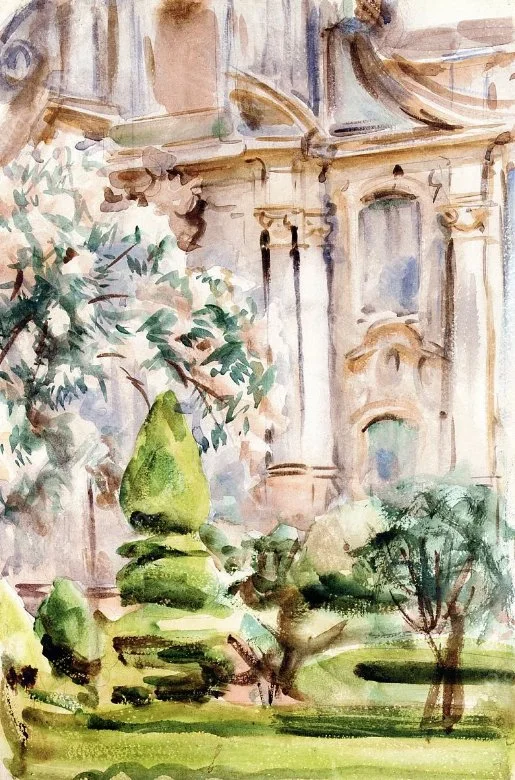
Tackling No. 1690 was a different beast from my earlier Venice identifications. The previous endeavors were all located in a confined, rigid, perpetually preserved city, shortening the 100+ years between us considerably. However, once I decided to pursue an identification in Spain, it dawned on me that not only did I have to search an entire region or country's tally of leads, but nestled between me and the piece was the possibility that the Spanish Civil War had transformed the built landscape considerably.
Reading the description in the catalogue raisonné carefully, I also concluded that we were relying on the accuracy of information from an auction listing in 1925, that likely did not come from JSS himself. It's not clear to me who titled the piece, but indeed, the title "A Palace and Gardens, Spain" proved to be the biggest red herring, and elongated my search by many days, likely. It is my opinion that No. 1690 depicts a scene showing the ballroom wing of the Palace of Queluz, Portugal. Pictured below:
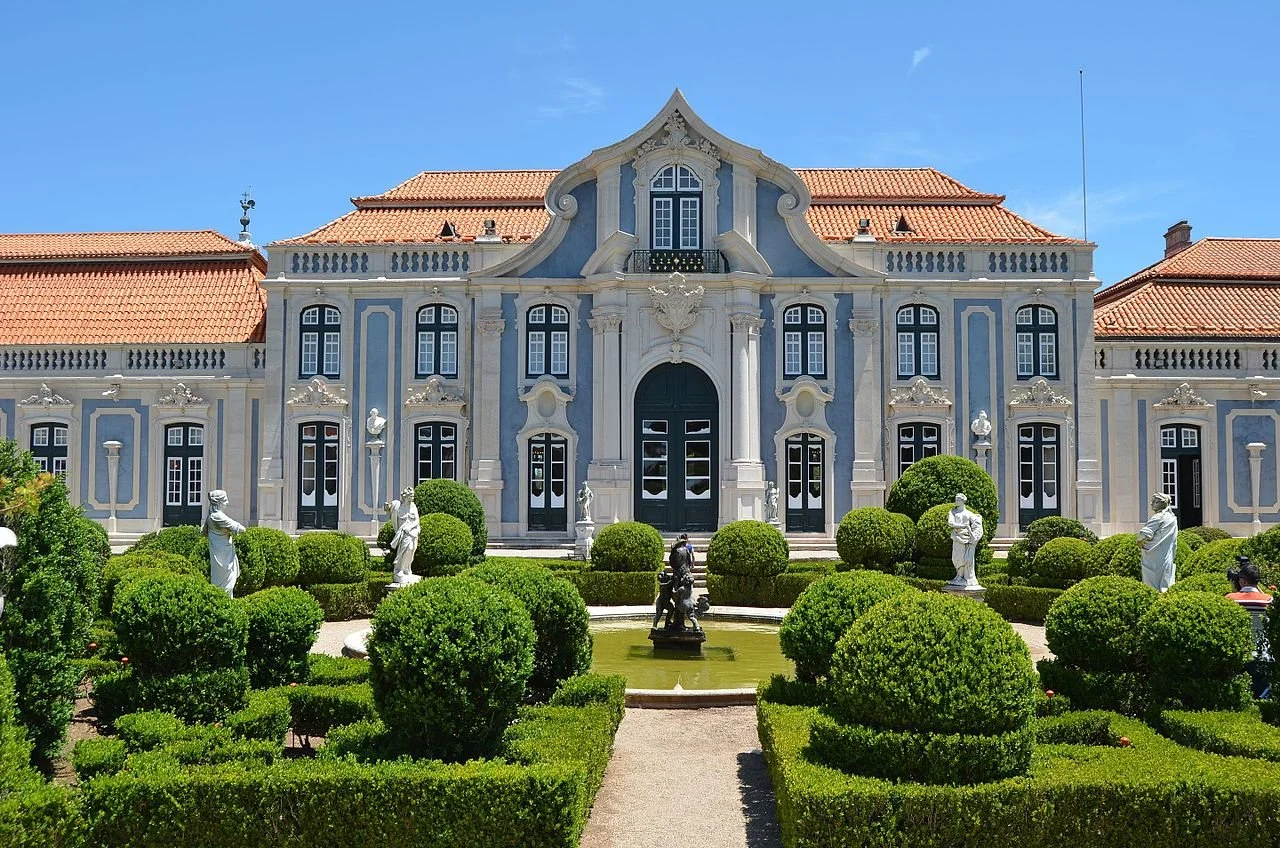
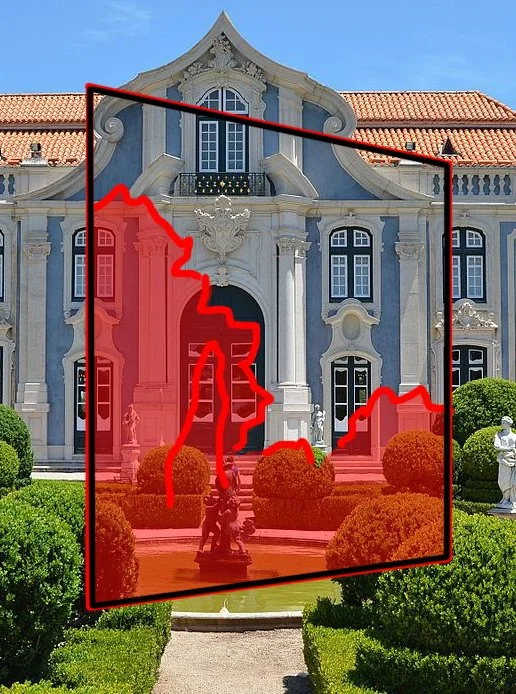
There are several unique features of the building appearing in the background of the scene that offer the only realistic clues in identifying the piece - the double Corinthian columns with a broken pediment above at the center of the piece, the upturned arch at the upper right hand of the piece, the thumbprint-shaped ornamentation between the 2 stories of windows below that, and what appears to be a sculptural coat-of-arms just behind the large tree, centered on the broken pediment. Here's an overlay of the image above with the approximate extents of the Sargent piece:
And perhaps more helpful, here's a side-by-side comparison of the piece and another image I found online, where the architectural features and proportions are a clear match:
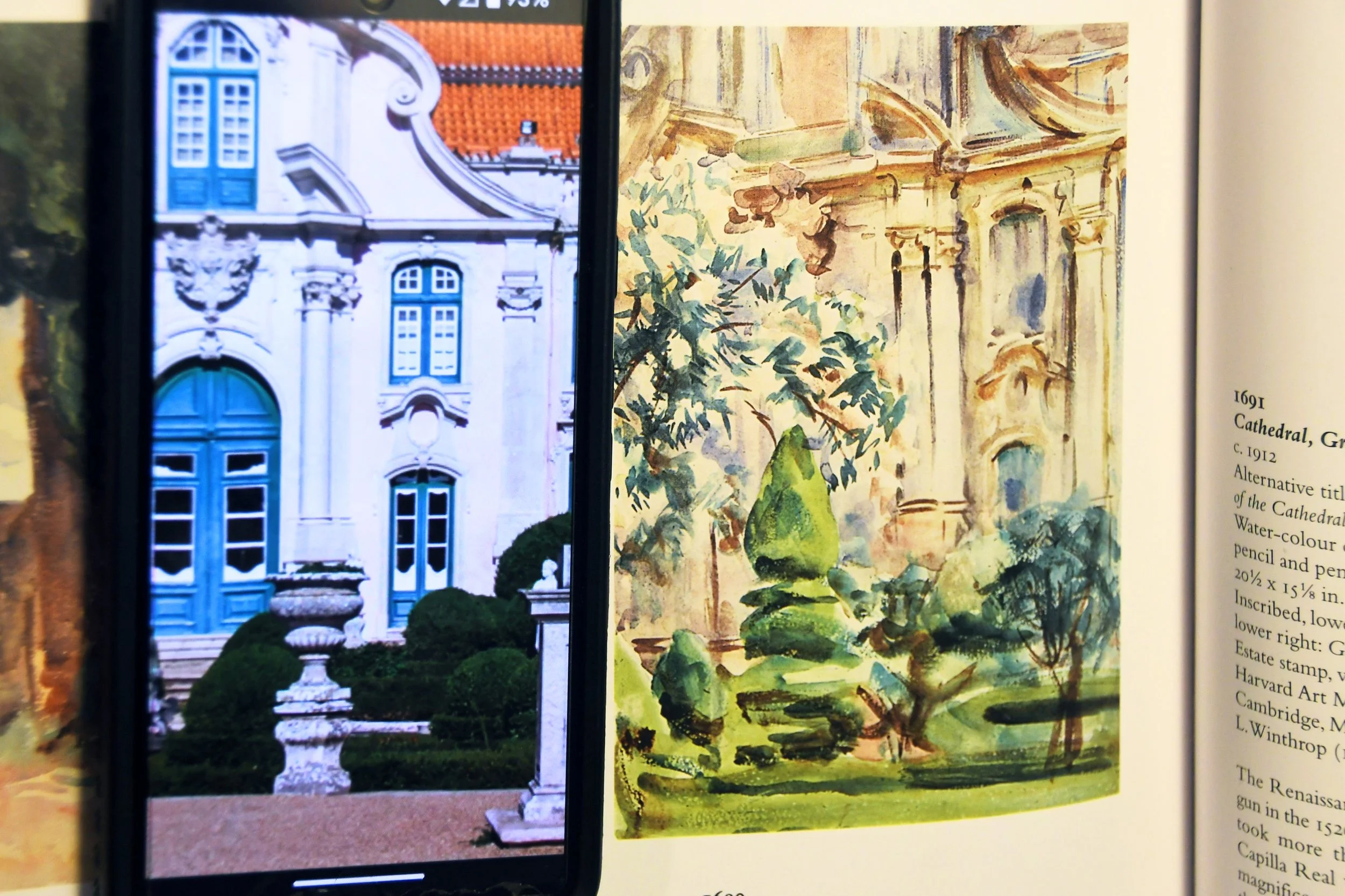
I will spare you the details of how I arrived in Portugal during my search, but the match is undeniable to me. I was also unaware that JSS had visited Portugal, but in another book ("Sargent & Spain") the timelines towards the back of the book proved quite valuable. In it I read that he visited Spain and Italy via Portugal in 1903. I wonder if this piece was painted at that time, but I do not know enough about his travels (e.g. how many times he transited Portugal) and about the history of this piece to make any assertion there. It was curious, though, that this piece did not appear in that book about Spain.
Date of identification: c. 5/22/2024, reported to the authors on 5/28/2024
