
This post is one of a series of blog posts covering my independent research on previously unidentified locations depicted in John Singer Sargent pieces. Pieces are identified using their Yale University Press ID numbers, as published in the series John Singer Sargent: The Complete Paintings, co-authored by Richard Ormond and Elaine Kilmurray. All findings are my own, represent my own opinions, and were reached using a combination of my own intuition & various publicly available tools, such as Google Maps & Google Street View.
This post covers the location depicted in John Singer Sargent’s piece titled “Venetian Canal Scene” (Yale 1095), a beautiful watercolor showing a scene of a wide canal, with boats in shade in the foreground.
Here is the piece in question:
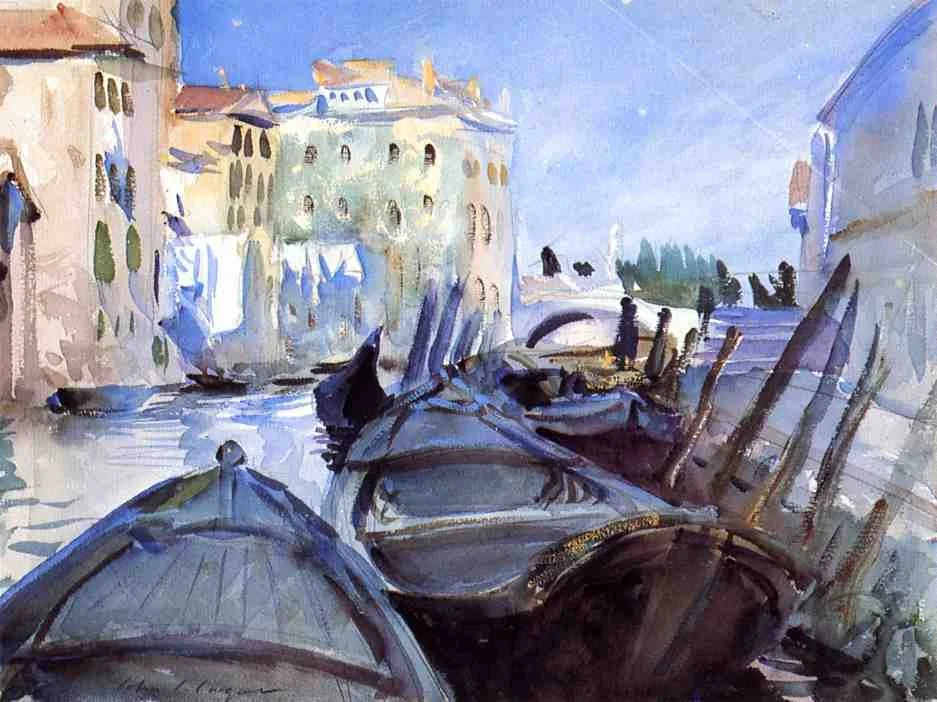
This one took me for a wild ride. Several aspects of the painting were glaring clues - for example, the canal is very wide for a side canal, there appears to be two bridges in the scene (one white bridge in profile in the background and another bridge just to its right with only the steps visible), and finally, the expanse of greenery in the far background - a rare sight in Venice! These clues should have made for an easy hunt, but it took me a bit of time to clarify what each clue meant. In the end, I think I have succeeded. The painting was painted in the Rio dei Mendicanti, alongside the Fondamenta dei Mendicanti, looking north.
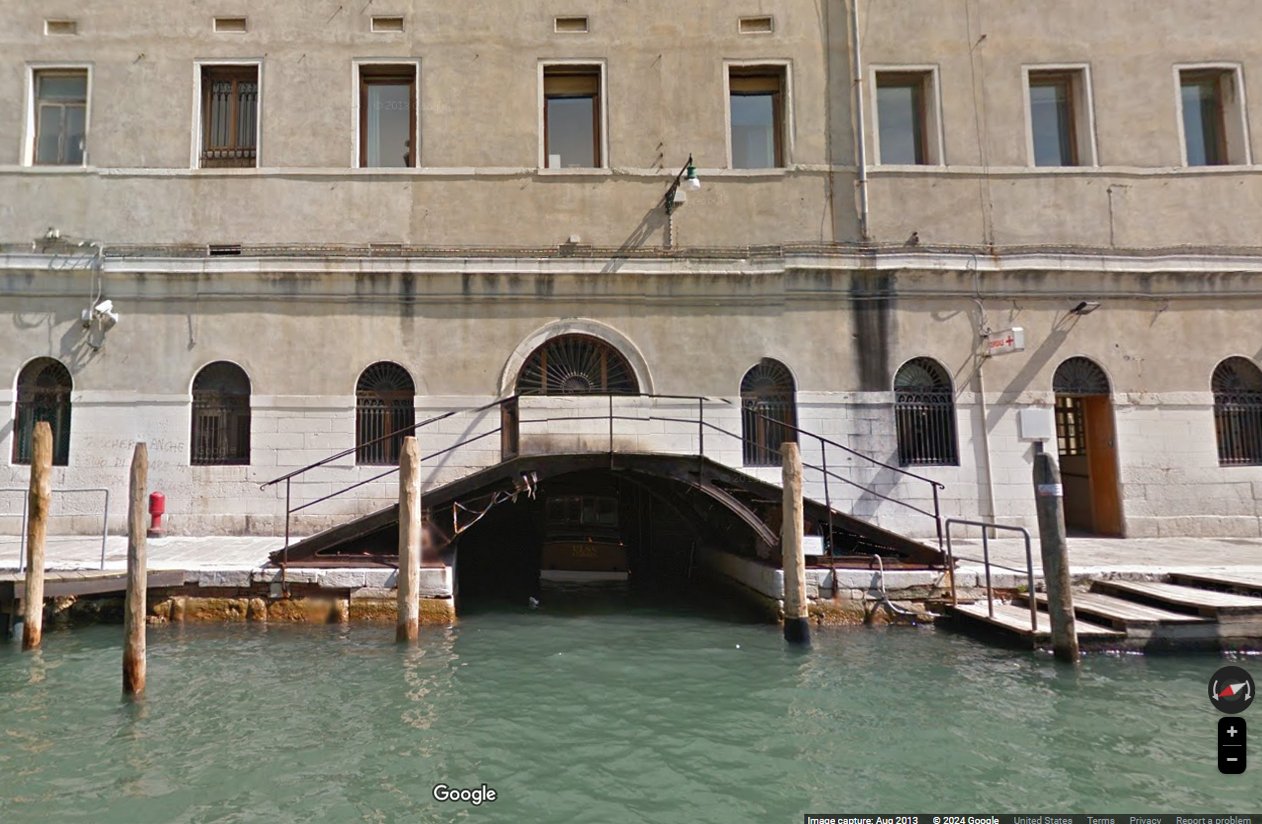
Here’s a Google Street view of the Fondamenta and the second "bridge" from the scene, but looking at it in profile.:
And here are various other Google Street views, with corresponding elements in the scene highlighted:
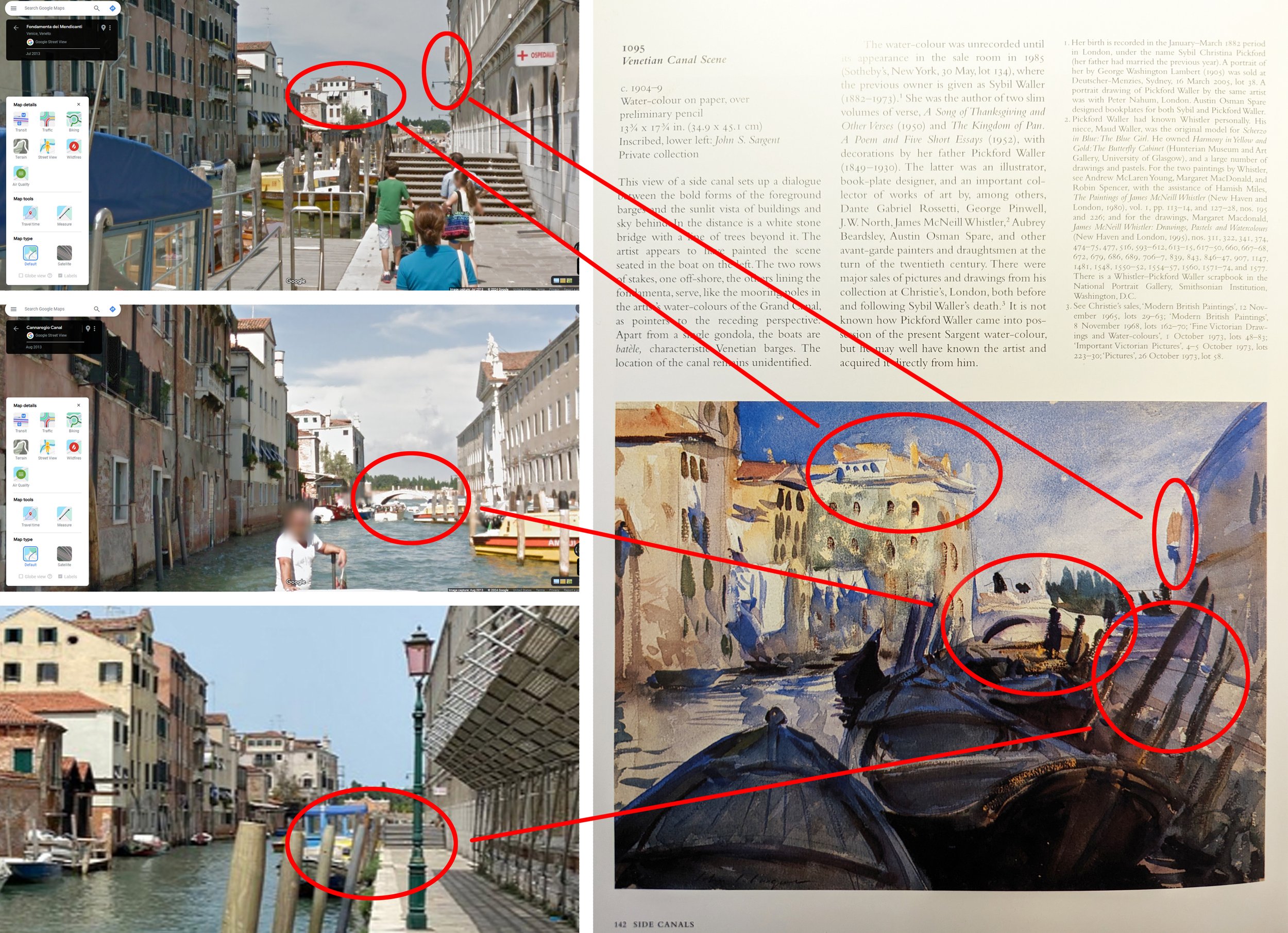
First off, the greenery is that of the San Michele Cemetery separated from the main islands of Venice in the lagoon. There are plenty of trees in the cemetery, and the view down Rio dei Mendicanti looking north does indeed offer a view of the cemetery (the bridge, by the way, is Ponte dei Mendicanti). Second, the Rio dei Mendicanti is, as suggested, a "wide" side canal. And third, the second "bridge" we are seeing (the one with only steps visible), does not actually bridge over an intersecting canal, but rather a boat entrance to the building to the east.
Date of identification: c. 1/31/2024, reported to the authors on 2/1/2024
